
“It’s Human Nature” was submitted as part of Ms Gergana Arshinkova’s final project for WRIT3025 – Big Stories: Long-form Fictional Narratives taught by Prof. Jason S. Polley in semester 2, AY 2025-2026.
“It’s Human Nature”
by
Gergana Arshinkova
A white nylon bag flaps around in the air, stuck to the barren branches of a chestnut tree.
The sun shines through the plastic as it keeps on waving to the people on the sidewalk below. They don’t notice it; everyone is headed in their own directions, eyes glued to phones or staring at their feet, avoiding any kind of human contact like it’s infectious.
Someone stumbles on the street. A woman drops her bag. An older man struggles to get his groceries up the stairs to his building. A tiny white sock slips off from a baby’s foot, and someone is already walking over it. No one acknowledges anyone. And no one cares. A strong current of self-importance runs through the city, making everyone chase the next important meeting, the next gym session, the next aesthetic meal to film, or the next useless thing to buy just because it’s trendy.
A shaggy white dog lifts its leg, marking the chestnut tree as its own. It sniffs at the wet bark before proudly pulling its owner toward its next target. The woman doesn’t register that she is the one being taken on a walk; she is too busy talking to the earbuds stuffed in her ears. Her sneakers scrape along the stone-tiled sidewalk, barely avoiding the muddy puddles left by the rain earlier this morning. Pink traces of chalk weakly glisten on the ground; it is the only evidence left from the hopscotch game that took place the day before.
The wind picks up again, the nylon crinkling against the tree. The sound blends with the roar of an engine as a bright red car drives over a pothole that grows bigger by the day. The suspension creaks under the automobile, and the curses of the man behind the wheel are muted by the layers of metal and glass. It’s not his first time hitting that exact pothole. It’s not going to be the last. People will drive over it, and it will grow until it eats up the whole street. It will force drivers to slow down. No one wants a broken car. They are too dependent on it.
The car goes around the corner, and the driver’s annoyance comes out of the exhaust in a storm of smelly black smoke. Who knows when that car was last inspected properly. It’s not as the driver cares; he is not the one breathing in the fumes.
Two people turn onto the street, piercing through the veil of dark smoke. A small boy holds onto the freckled hand of a woman. Smooth fingers meet wrinkled skin, mapped by time. In her other hand, the grandmother pulls a shopping trolley, her left leg dragging slightly behind her. She smiles as the child skips next to her. He points to the bag dangling above their heads. Her smile tilts into a grimace, and the woman clicks her tongue in disappointment: “Съсипаха я тази държава”, she mumbles before they cross the street, heading towards the park nearby.
They soon disappear behind another corner, but the cat staring from the first-floor window keeps watching over the street. Its blue slitted eyes dart rigidly between the people, the cars, the dogs, and the bags hanging from trees. Its ears twitch at the sharp sound of a bicycle bell.
A deliveryman props his bike against a wall and runs past an overflowing garbage bin. In a hurry, he throws a dirty tissue towards the metal container, not really caring if it gets in or not. Music blasts in his ears as he looks at the delivery address on his phone. A bag of food hangs in his other hand. He is too busy to notice the dirty napkin that bounces off the side of the bin and rolls onto the street. The white tissue stands out against the asphalt like a drop of white paint on a dirty floor.
A second later, a car drives over it, flattening it to the ground. And then another. And another, until it finally sticks to the tire of a truck that carries it away from the street.
The wind picks up again, shaking up the drying leaves that are still lucky enough to be attached to the trees. Towards the end of summer, the air buzzes with exhaustion. Even the short summer rains cannot wash away the dust that clings to the ground and mixes with the dead leaves. A woman in a red jacket sweeps the foliage from the street, but every car that passes by scatters it again, and she must start anew. No one, but the nylon bag above her head, hears her sigh of frustration. It gets lost in the polluted heartbeat of the city. She wipes her sweat-beaded forehead and keeps sweeping as the bag silently waves her on.
A car horn sounds from the boulevard next to the small street.
The robotic voices from a dubbed TV show carry through an open window and spill onto the road, along with the strong scent of baked stuffed peppers.
A clicking sound from a child’s toy pierces the stagnant air.
A couple crosses the street, holding on to each other only by their pinkies, refusing to allow the heat and sweat to separate them.
A group of teenagers leave the park, briefly passing over the sidewalk, completely oblivious to the greetings of the bag. One of them blasts music through a huge speaker in his hand. Some vulgar, raspy song, screaming about nothing, and yet disturbing everything around it. Their voices take over the sound of daily life, as the boys try to make themselves big and important. Soon, they walk out of the vicinity of the bag, but the music and their loud conversation carry on even after they are gone. Lingering, begging to be noticed.
The sharp buzzing from the construction on the next street over sends a sharp rumble through the air, and for a second, it mutes everything else. The sighs, the crinkling, the horns, the TVs, the speakers, the indifference. Even the people who would usually stroll along the street with their eyes buried in their phones or lost in thought glance at the disturbance. For a second, they are all united in their annoyance. But then life picks up again, and the buzzing stops for a moment, allowing everything else to spill back into the air again. Poison and beauty alike. Pumping and mixing as the city keeps breathing.
A sparrow lands on the chestnut branch. Its little black eyes size up the plastic bag for a few seconds before deeming its movements safe. It jumps along the tree, pecking at the greyish-brown bark and the line of black ants crawling on its surface. After one last cautious head tilt, the bird lets out a chirp and flies to the ground, hopping down the street, searching for food. The bag looks like it wants to follow, the plastic fluttering in the air faster and faster, even though the wind has almost died down completely. A rip begins to form in the place where the bag is trapped to the tree, and the more the plastic rebels against the wood, the bigger the rip grows.
As the sun reaches its peak, the heat ripples in the air, torturing everything and everyone that dares to be out at this time of day. Kids are being led home from the park with lunch and a nap waiting for them at home. People with their faces drenched in sweat walk quickly along the sidewalk, hiding in the slim shade provided by the apartment buildings. In this weather, even the phones are forgotten, hanging limp in sweaty palms or tucked away in pockets and bags, the machines overheating in the summer air.
The only things benefiting from the brutal heat are the wet clothes, clipped to laundry rods and hanging on balconies and from windows. It’s as if they’re waving at the bag, and the bag waves back. The various fabrics ripple in the weak wind, savoring the heat and basking in the sun like cats.
But even the real animals cannot withstand the sizzling sun. A scruffy orange creature turns around the corner and runs across the almost melting asphalt, darting under a car. There is a name here for cats and dogs like that, those which haven’t been carefully bred for decades, and which do not have certificates to authenticate a noble breed. The street excellency hardly lives up to the name. The cat is missing most of its tail and half of its left ear, and muddy crumbs hang from its short coat. It lies in the shade for a few minutes, hidden from the bag that uses the wind to sway harder, trying to catch a glimpse from above.
Just as it begins to give up, a cautious paw extends from under the car, followed by a small head, and then a lean, stripey body. The cat runs across the street again, but this time it stops in front of the small cosmetics store next to the entrance of the apartment block. A small plastic bowl is placed near the front door. The clean water splashes as the cat drinks warily. It jumps once or twice as people walk past it, running onto the street, before returning and taking another sip. After it’s spooked for a third time, the stray runs away for good, probably searching for a patch of thick shade or a broken basement window to hide in until the evening air squashes the heat.
As the cat disappears around the corner, a boy turns up on the street. A backpack swings from his left shoulder, and in his right hand, he holds an ice cream. The chocolate swirl is covered in syrup that drips down the cone. As the boy looks around to cross the street, a shout comes from behind him, and two other kids run up to him – a taller boy holding a football, and a girl pushing a red scooter. The kids talk, and they laugh; they punch each other playfully on the shoulder, and before the bag knows it, the three of them run towards the playground on the next street like it is the most important thing in the world. More important even than the ice cream, which almost gets dropped once or twice.
“The last one there stinks!”
Their voices carry on after they are gone, jumping from building to building, somehow louder than even the cars passing on the street. The only sound more piercing than the kids’ laughter will be their mothers’ shouts, beckoning them home for dinner in a few hours.
Soon their voices, along with the wind, vanish between the cracks of the city. Stillness spreads over the street as the sun begins its journey towards the mountain. The bag slowly follows suit as the evening’s tranquility seizes the nylon.
The heat still lingers on, though.
It’s evident in the German Shepherd that is out for its evening walk. Its pink tongue hangs loose from its mouth, searching to find relief from the merciless end-of-summer air. Its owner suffers too, with pit stains forming under his arms and around his neck, even at this time of day. Every few minutes, he wipes his forehead or fans at his face, but his mind is lost somewhere else, stuck to a million other things more important than spending time alone. It’s hard to be bored nowadays. There’s simply too much to think about.
For a second, the quiet bubble of the evening is disrupted by a loud creak. The bag can’t see its source, but it has been hearing it the whole day. The old tram runs along rusty metal tracks, squealing as it follows the winding road. At first, the sound is disruptive – a loud, grating nuisance pounding in one’s ears. But the more it appears throughout the day, the more it blends with the background noise of the city, pumping and buzzing, releasing noises, pollution, and ignorance…but also small acts of kindness and laughter. Sometimes they get lost in the current of daily life, but does that mean they are not there? And worse, even if they are there, do they matter when they’re so rare?
A woman walks up to one of the cars parked along the sidewalk and leans against it. Her bright yellow bag stands out against the blue paint, like a buoy in a dark sea. The bag knows how it goes by now. The woman will take out her phone, drowning in its shallow entertainment, chasing that easy endorphin fix. She will turn off her brain with the excuse, “This is how I relax”, so she can enjoy wasting her potential in peace.
The bag’s movements are no longer energetic. It flaps weakly and aimlessly in the air, waiting for the next rejection. After all, what are people if not consistent in their ignorance? It’s their nature.
There! She reaches into her bag, rummaging through its contents, and she takes out a… sketchbook. And then a pencil. The light dwindles as the sun drops behind the mountain, and the streetlamps begin to turn on one by one, and yet she still takes out her little book. And she draws. Her sketches are quick and messy, but they’re present. She looks at the graffiti on the corner of a building and puts it on paper. She sees the overflowing metal bin, and she draws it. She notices the trail of small paw prints left in the asphalt before it was dry and marks them in her little book. She observes the trunk of the chestnut tree, and her eyes slowly climb up until they reach the plastic bag. Her head tilts slightly to the left as she blinks slowly, deliberately. She follows its weak movements, animated by the evening breeze.
She sketches it.
The bag has never been drawn before. People often don’t see it or just pass it by. It is rarely perceived for long enough to be remembered. But this woman sees it. She sees something in the torn-up plastic that is worthy of commemoration. Worthy of her time.
The bag tries to sway harder to see the sketch better, but the tree is unforgiving; it holds it tight.
Soon, a man comes out of the building across the street and heads to the blue car. The woman is too busy finishing up her drawing to notice him. The guy walks around the car and kisses her on the cheek, stealing her attention away from the paper. She closes the sketchbook, and they get into the car, but the bag remembers her long after they are gone.
Someone noticed it for a few minutes, and that’s enough.
As the sun dips behind the mountain and the darkness fully creeps in, more windows light up. The smell of food leaks onto the street, alongside the shadows of people, now slightly visible from behind curtains and blinds. Couples prepare their dinners, friends dance in living rooms, kids jump on beds, and cats walk lazily along windowsills. Life moves away from the street and retreats home.
An old man watches TV; a young woman comes back from work and dramatically collapses on the sofa; a small old lady waters her plants, while her younger neighbour listens to depressing music and eats ice cream; a young man works out in his room, his form and weights appearing as a solid shadow behind his thin curtains.
The bag still hangs from the chestnut tree, and the exhaustion of the day is reflected in its stillness. The cars on the street become fewer, and the noise from conversations and construction dies down. The few strangers outside become more deliberate with only one goal on their mind – to get home. The birds quiet down, too, and soon the cricket song takes over the street; its only disturbance being the occasional roar of an engine or the creaking of the last few scheduled trams.
A slow movement ripples through the heavy stillness, as an elderly Husky takes its last walk. Its steps are stiff and slow, but his family is patient. The mother holds the hand of a small girl, while the father holds onto the dark leash attached to the dog’s collar. They are all quiet, even the child, who can barely walk. After a while, the mother picks up the girl as they cross the street, but her innocent eyes stay on the dog. Worried, without truly knowing why. Sad, but in a quiet way. It is the last time the four of them will go on a walk together. Even the bag knows not to disturb them. It hangs limp in the air, not taking any more space than it must. The dad’s hand slightly shakes as he watches his friend breathe in the world for the last time. He starts blinking rapidly, then turns to say something to his wife and daughter. The bag is too far away now to hear, but it doesn’t need words to understand. Grief goes beyond the human language. It hides in the slump of the shoulders and in the lines of the mouth; it lingers in the eyes and in the slightly shaking hands. It leaves a trail that can’t be seen or smelled but makes one’s heart skip a beat at the most random times, almost like a crack in the wall that lets in the evening’s breeze from time to time. Soon, the family turns around the corner, but the grey furry tail disappears last, lingering for as long as it can.
Some time passes, and now the bag is all alone on the street. Even the stray animals have found a place to rest for the night. The only movements on the street come from the soft sway of the bag, the quiet journey of the moon, and the hungry mosquitoes searching for an open window.
A white nylon bag hangs in the air, stuck to the barren branches of a chestnut tree. A jagged rip in the plastic runs along its side – it is the only evidence of its attempts to greet the world.
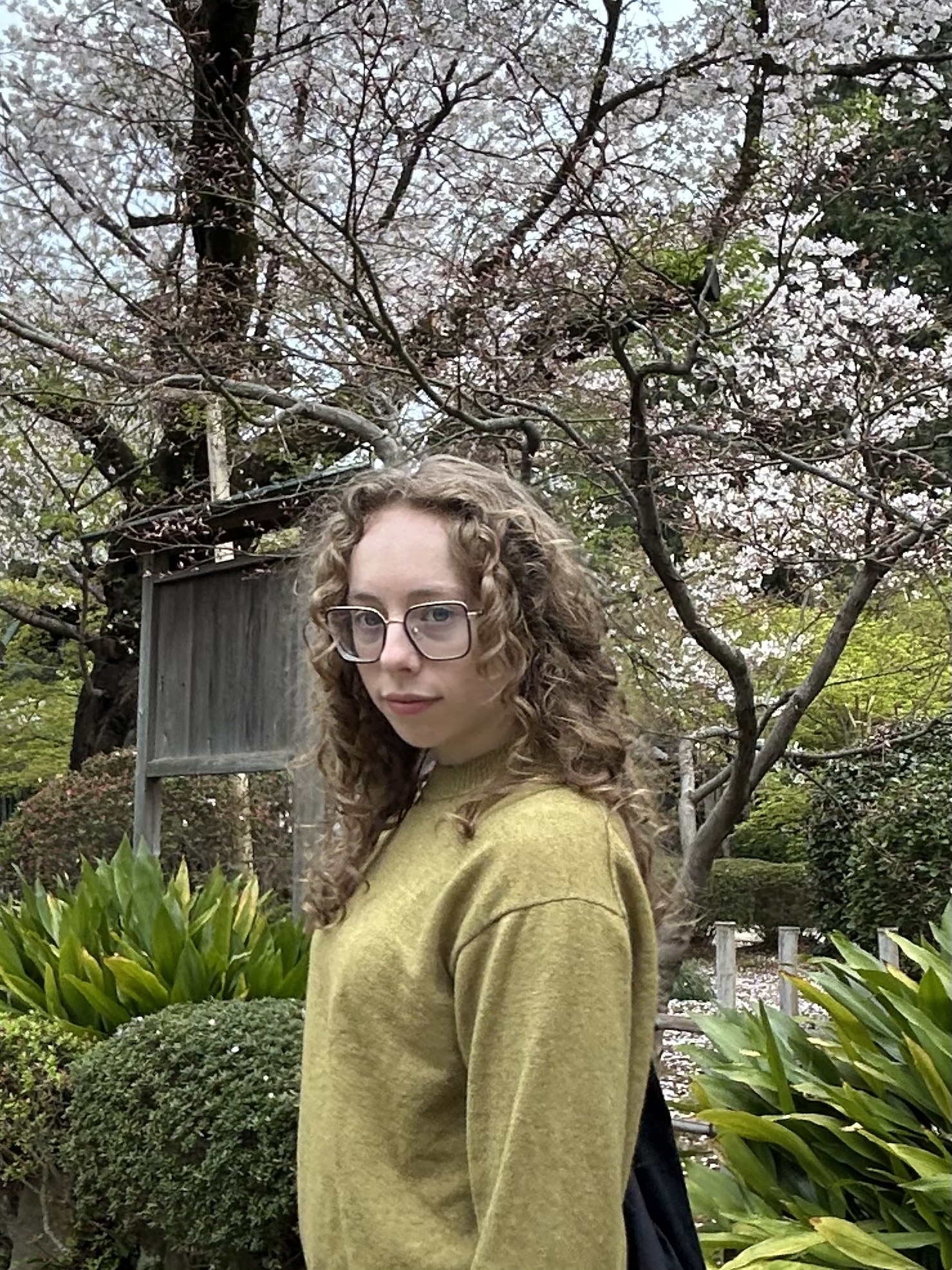
Bio of the Artist:
Gergana Arshinkova is a third-year student at the University of Galway, Ireland. She was an exchange student at HKBU in 2026, where she studied English Literature and Creative Writing. She is originally from Bulgaria, and she tries to incorporate that in a lot of her work, including “It’s Human Nature”, which is based on a real street in her hometown — Sofia.

